
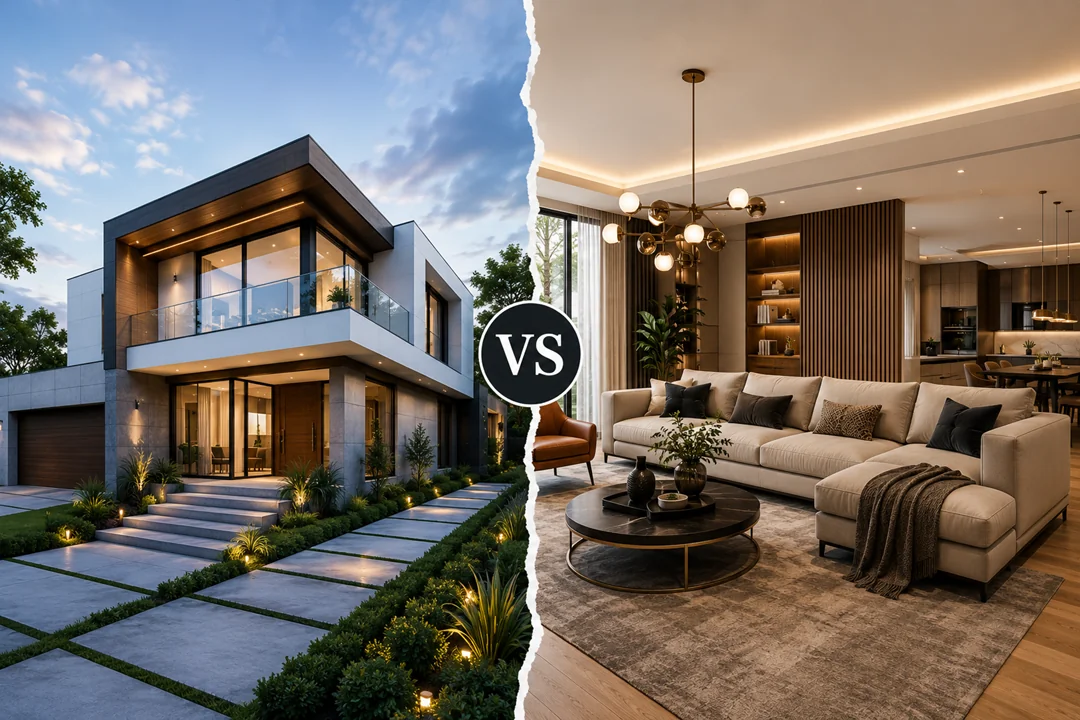
What Is the Difference Between Architecture and Interior Design?
Architecture and interior design are two closely related professions that work together to create functional, beautiful, and comfortable spaces. While many people use these terms interchangeably, they are actually distinct disciplines with different responsibilities, skills, and objectives.
Understanding the difference between architecture and interior design is important for homeowners, business owners, and anyone planning a construction or renovation project. This article explains the key differences between the two fields, their roles, and how they collaborate to create exceptional spaces.
What Is Architecture?
Architecture is the art and science of designing buildings and structures. Architects focus on the overall design, functionality, safety, and structural integrity of a building.
An architect is responsible for:
- Designing the building’s exterior and structure
- Planning layouts and floor plans
- Ensuring compliance with building codes and regulations
- Managing structural, electrical, and mechanical considerations
- Coordinating with engineers and contractors
- Creating sustainable and energy-efficient designs
Architecture involves both creative design and technical expertise to ensure that buildings are safe, durable, and functional.
Examples of :
- Residential homes
- Commercial buildings
- Office complexes
- Hospitals
- Schools and universities
- Shopping malls
- Hotels and resorts
What Is Interior Design?
Interior design focuses on enhancing the interior spaces within a building to improve aesthetics, functionality, comfort, and user experience.
Interior designers work on:
- Space planning
- Furniture selection
- Color schemes
- Lighting design
- Material and finish selection
- Decorative elements
- Interior layouts
- User comfort and functionality
Their goal is to create attractive and practical environments that meet the needs of the people using the space.
Examples of :
- Living rooms
- Bedrooms
- Kitchens
- Corporate offices
- Restaurants
- Retail stores
- Hotels
- Healthcare facilities
Key Differences Between
1. Scope of Work
Architecture:
- Focuses on the entire building structure.
- Deals with exterior appearance and structural planning.
- Ensures safety and compliance.
Interior Design:
- Focuses on interior spaces.
- Enhances aesthetics and functionality inside the building.
- Improves user experience and comfort.
2. Project Stage
Architects:
- Become involved at the beginning of construction projects.
- Create the building’s foundation, structure, and layout.
Interior Designers:
- Usually become involved after the architectural framework is established.
- Refine and optimize interior environments.
3. Technical Responsibilities
Architects:
- Structural systems
- Building codes
- Construction documents
- Engineering coordination
Interior Designers:
- Furniture layouts
- Interior finishes
- Lighting plans
- Decorative elements
4. Education and Training
Architecture:
- Requires a professional architecture degree.
- Often requires licensing and registration.
- Includes structural engineering and construction studies.
Interior Design:
- Requires education in interior design or related fields.
- Focuses on space planning, design principles, materials, and aesthetics.
- Professional certification may be required in some countries.
5. Primary Objective
Architects:
- Design safe, functional, and structurally sound buildings.
Interior Designers:
- Create comfortable, attractive, and efficient interior spaces.
Architecture vs Interior Design: Comparison Table
| Feature | Architecture | Interior Design |
|---|---|---|
| Focus | Building Structure | Interior Spaces |
| Work Area | Exterior & Structural Design | Interior Layout & Decoration |
| Main Goal | Safety & Functionality | Comfort & Aesthetics |
| Project Stage | Before Construction | During/After Construction |
| Technical Complexity | High Structural Involvement | High Spatial & Design Involvement |
| Licensing | Usually Required | Varies by Region |
| Scope | Entire Building | Inside the Building |
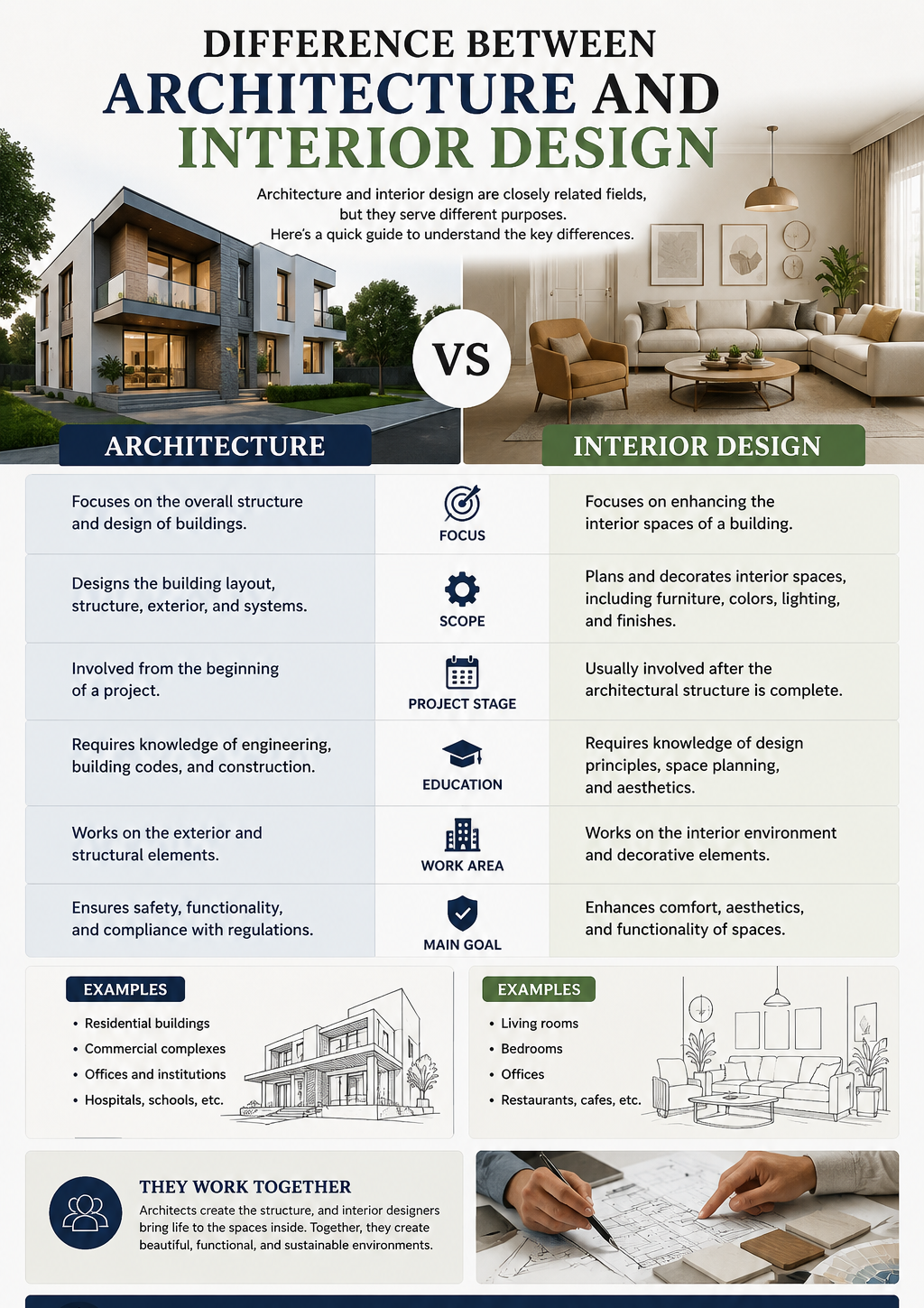

How Architects and Interior Designers Work Together
Successful projects often require collaboration between architects and interior designers.
For example:
- Architects design the building shell and structure.
- Interior designers create functional and visually appealing interior spaces.
- Both professionals coordinate on lighting, space planning, materials, and user experience.
This collaboration ensures a seamless transition between the building’s architecture and its interior environment.
Which Professional Should You Hire?
Hire an Architect If You Need:
- A new building design
- Major structural changes
- Home additions
- Building permits and approvals
- Construction planning
Hire an Interior Designer If You Need:
- Interior renovation
- Space optimization
- Furniture and décor selection
- Color and material planning
- Lighting and aesthetic improvements
For large projects, hiring both professionals often delivers the best results.
Career Opportunities
Architecture Careers
- Residential Architect
- Commercial Architect
- Landscape Architect
- Urban Designer
- Sustainable Design Consultant
Interior Design Careers
- Residential Interior Designer
- Commercial Interior Designer
- Hospitality Designer
- Retail Space Designer
- Furniture Designer
Both fields offer rewarding careers with growing demand worldwide.
Conclusion
Although architecture and interior design share the common goal of creating better spaces, they serve different purposes. Architecture focuses on the design and construction of buildings, while interior design enhances the functionality, aesthetics, and comfort of indoor environments.