What Is the Most Popular Color for Interior Walls?
When it comes to home design, few decisions have as much impact as choosing the right color for your interior walls. Wall color sets the mood, influences how large or small a room feels, and helps define your home’s overall style. Whether you’re renovating a single room or redesigning your entire house, understanding the most popular interior wall colors can help you make a confident choice.
Interior walls play a major role in defining the style, comfort, and personality of a home. From selecting right color to choosing modern wall designs, every decision impacts the overall appearance of a space. Whether you’re renovating your home or designing a new one, understanding the most popular interior wall colors and design trends can help you create a beautiful and welcoming environment.
So, what is the most popular color for interior walls?
The answer is simple: white. However, there are several other popular shades that homeowners and interior designers consistently choose for their versatility, beauty, and timeless appeal.
Why Interior Wall Color Matters?
Interior wall colors do more than simply decorate a room. They can:
- Influence mood and emotions
- Affect the perception of space
- Reflect natural and artificial light
- Complement furniture and décor
- Increase a home’s visual appeal and value
Right color can transform an ordinary room into a welcoming, stylish, and comfortable living space.
Most Popular Color for Interior Walls: White
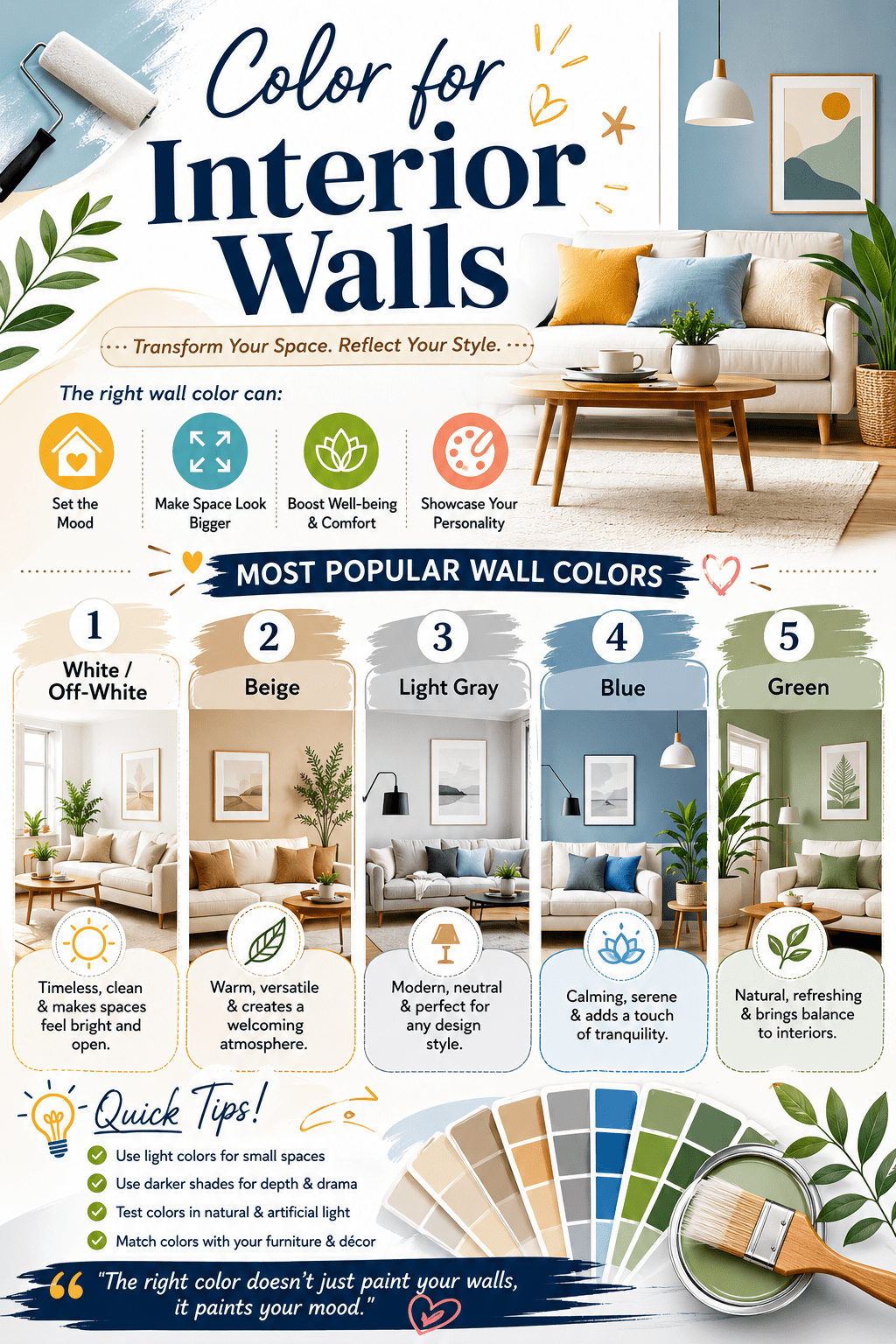
White remains the most popular interior wall color in Dhaka. It has maintained its popularity for decades because of its simplicity, versatility, and timeless elegance. The most popular color for interior walls is white, followed closely by shades of gray, beige, and greige (a blend of gray and beige). White remains the top choice because it creates a clean, bright, and spacious feel that works with almost any décor style.
Why White Walls Are So Popular?
1. Makes Rooms Feel Larger
White reflects light better than any other color, creating an airy and spacious appearance. This makes it especially effective in smaller rooms and apartments.
2. Brightens Interior Spaces
Rooms with white walls often feel brighter and more open because they maximize both natural and artificial light.
3. Works With Any Design Style
White complements virtually every interior design style, including:
- Modern
- Minimalist
- Traditional
- Scandinavian
- Farmhouse
- Contemporary
4. Easy to Decorate Around
White serves as a neutral backdrop, allowing furniture, artwork, rugs, and accessories to stand out.
Popular White Paint Shades
Not all whites are the same. Some popular variations include:
- Pure White
- Warm White
- Soft White
- Off-White
- Cream White
- Ivory White
Each shade creates a slightly different atmosphere depending on lighting and surrounding décor.

Other Popular Colors for Interior Walls
Although white dominates the market, several other colors continue to trend in homes around the world.
Gray
Gray has become one of the most requested interior wall colors over the last decade.
Benefits of gray walls:
- Modern and sophisticated appearance
- Works well with most furniture colors
- Available in warm and cool tones
- Suitable for living rooms, bedrooms, and offices
Light gray creates a soft, calming environment, while dark gray adds depth and elegance.
Beige
Beige remains a classic choice for homeowners seeking warmth and comfort.
Advantages include:
- Creates a cozy atmosphere
- Pairs well with wood furniture
- Timeless and versatile
- Ideal for traditional and transitional interiors
Greige
Greige combines the best qualities of gray and beige.
This modern neutral color offers:
- Warmth without feeling yellow
- Sophisticated appearance
- Excellent flexibility with décor styles
- Strong resale appeal
Many interior designers consider greige one of today’s most practical wall colors.
Soft Blue
Blue is associated with calmness, relaxation, and serenity.
Popular uses include:
- Bedrooms
- Bathrooms
- Reading rooms
- Home offices
Light blue shades can create a peaceful retreat while still maintaining a bright and fresh feel.
Sage Green
Nature-inspired colors have become increasingly popular in recent years.
Sage green offers:
- A relaxing atmosphere
- Natural elegance
- Compatibility with wood and neutral tones
- A modern yet timeless appearance
Many homeowners use sage green to bring the outdoors inside.
How to Choose the Best Interior Wall Color?
Selecting the perfect wall color involves more than following trends.
Consider these factors before making your decision.
Room Size
Lighter colors make rooms appear larger and more open, while darker colors create a cozy and intimate feeling.
Natural Light
The amount of sunlight entering a room significantly affects how paint colors appear throughout the day.
Rooms with limited natural light often benefit from lighter shades.
Existing Furniture
Your wall color should complement furniture, flooring, and decorative elements.
Neutral colors typically offer the most flexibility.
Desired Mood
Different colors create different emotional responses.
- White: Clean and fresh
- Blue: Calm and peaceful
- Green: Natural and relaxing
- Gray: Sophisticated and modern
- Beige: Warm and inviting
Home Style
Choose colors that align with your home’s overall design aesthetic.
For example:
- Modern homes often use white, gray, and greige.
- Traditional homes frequently feature beige and warm neutrals.
- Scandinavian interiors emphasize soft whites and muted tones.
Trending Interior Wall Color Ideas
If you’re looking for inspiration, consider these popular combinations:
White Walls with Black Accents
Creates a modern, high-contrast appearance.
Sage Green with Natural Wood
Produces a warm and organic feel.
Greige Walls with White Trim
Offers timeless elegance and versatility.
Soft Blue Bedrooms
Encourages relaxation and restful sleep.
Warm Beige Living Rooms
Creates comfort and hospitality.
Common Mistakes to Avoid
When choosing wall colors, avoid these common errors:
Ignoring Lighting
Always test paint samples before committing to a color.
Following Trends Blindly
Choose colors that suit your lifestyle and preferences rather than temporary trends.
Using Too Many Colors
A cohesive color palette creates better visual flow throughout the home.
Forgetting About Finish
Paint finish matters just as much as color.
Popular finishes include:
- Matte
- Eggshell
- Satin
- Semi-gloss
Each finish affects durability and appearance.
Final Thoughts
White continues to be the most popular color for interior walls because of its ability to create bright, spacious, and timeless interiors. However, gray, beige, greige, soft blue, and sage green are also excellent choices that offer unique benefits and design possibilities.
The best wall color ultimately depends on your home’s style, lighting conditions, furniture, and personal preferences. By understanding how different colors influence a space, you can create rooms that feel both beautiful and functional.
Whether you prefer crisp white walls, soothing greens, or warm neutrals, selecting the right interior wall color is one of the most effective ways to enhance the comfort and appearance of your home.